
It’s Election Season! Get Out the Disability Vote!
- Podcast URL: https://open.spotify.com/episode/0CfdrBtUDEqPJaHiruBtKu?si=8ZhKlp0jRhCtHEMH0OVrPQ
Election season is here! This year, Georgia voters will choose their next Governor, US Senator, US representatives, and many other leaders. These elections matter a lot for people with disabilities.
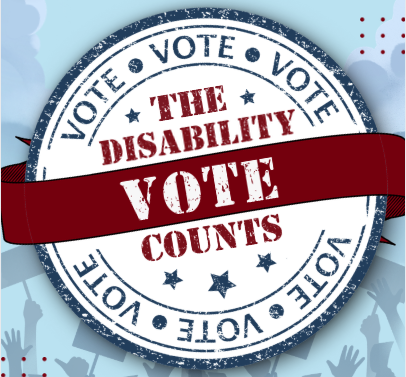 First come the primary elections. In a primary, voters pick which candidates will represent each political party. Primaries don’t always get as much attention as the big general election — but they are super important. Georgia’s primary election is May 19th.
If disability issues are not part of the conversation now, they may not show up later. Stacey Ramirez of REV UP Georgia explained, “It’s critical that the general election has a pool of candidates that are familiar with disability issues.”
So, who determines who those candidates are and the issues they fight for?
The answer is voters.
Did you know that people with disabilities are one of the largest groups of voters in the country? Research from Rutgers University shows that 1 in 6 people has a disability. When you include people who live with someone who has a disability, that number goes up to 1 in 3!
That is a huge group of voters who have the power to change elections and bring attention to issues that matter to them.
But that power is often not used. “The disability voting bloc is the most ignored,” said Daniel Crimmins.
Crimmins and Ramirez started a group called Crimminz & Associates. With help from the Georgia Council on Developmental Disabilities (GCDD), they lead REV UP Georgia. REV UP stands for:
- Register
- Educate
- Vote
- Use your Power
REV UP’s goal is to help people with disabilities come together, learn about the election process, vote, and have their voices heard.
Voting is one of the most direct ways people can create positive change in their communities. For many people with disabilities, voting is not always easy. Some common barriers include:
- Hard to get to the polls (transportation)
- Confusing information about voting rules and rights
- Feeling like your vote won’t make a difference
In rural areas, these challenges can be even harder. Ramirez and Crimmins are focused on helping people in rural areas better understand the voting process and feel confident participating in it. The goal is for people with disabilities to be seen as leaders in getting out the vote.
That starts at the community level. REV UP has found seven disability leaders across Georgia who are trusted in their local communities. When information comes from someone you know and trust, you are more likely to listen!
These leaders share a flyer called Are You Vote Ready? It provides clear information to help people be active, informed voters. Ramirez shared that checking your registration is an important first step – even if you have voted before. You can check your voter status on the Georgia My Voter website.
REV UP is also holding candidate forums around the state. These are friendly conversations (not debates!) where voters with disabilities can meet candidates, ask questions, and share their experiences. Check the REV UP Georgia Facebook page for details.
They are also using a strategy called vote tripling. Here’s how it works:
- You check your own voter registration.
- Then you call a friend and help them check theirs.
- That friend then calls another person and does the same thing!
“Vote tripling is selective door-to-door — the doors you know will open,” Crimmins said. This kind of peer-to-peer outreach helps information travel further. It also builds stronger connections along the way.
REV UP’s work is about more than one election. It’s about building strong networks where people with disabilities are leading, organizing, and shaping conversations that impact their communities.
Important Election Deadlines
- Last day to register to vote in a primary: April 20
- Last day to apply for an absentee ballot: May 8
- Last day to vote by absentee ballot: May 19
- Primary Election Day: May 19
Voting Resources
Check your registration, polling place, find a sample ballot, and more!
Georgia Secretary of State: Check that your registration is active at https://mvp.sos.ga.gov/s/. This is also where you can find your polling place (it may have changed!), view your sample ballot, and look up early voting locations.
Learn About Candidates
Learn about the candidates and issues (branch.vote or ballotpedia.org/Georgia), make a plan to vote, and share that information with others.
Know Your Rights as a Voter with a Disability
Under federal law, all polling places must be accessible. Here is what you need to know:
You can bring someone to help you vote. This could be a family member, friend, or caregiver. The helper just needs to write their name on your voter certificate. (Note: your boss, a union rep, or a poll worker from your precinct cannot be your helper.)
Helpful tools are available, including:
- Headsets and apps that read the ballot out loud (for people who are visually impaired)
- Magnifying tools to make the ballot easier to see
- Large controls and sip-and-puff devices for people with limited mobility
- Touchscreen voting units that can be used from a wheelchair
Voters with disabilities can go to the front of the line. You do not have to wait in a long line — you can move to the front for the next available booth.
Had a problem voting? You can file an ADA complaint or contact Georgia election officials.
Need help? The Georgia Advocacy Office can help with disability concerns from now through Election Day. Call (404) 885-1234 or (800) 537-2329 and leave a message. Someone will call you back within two business days.

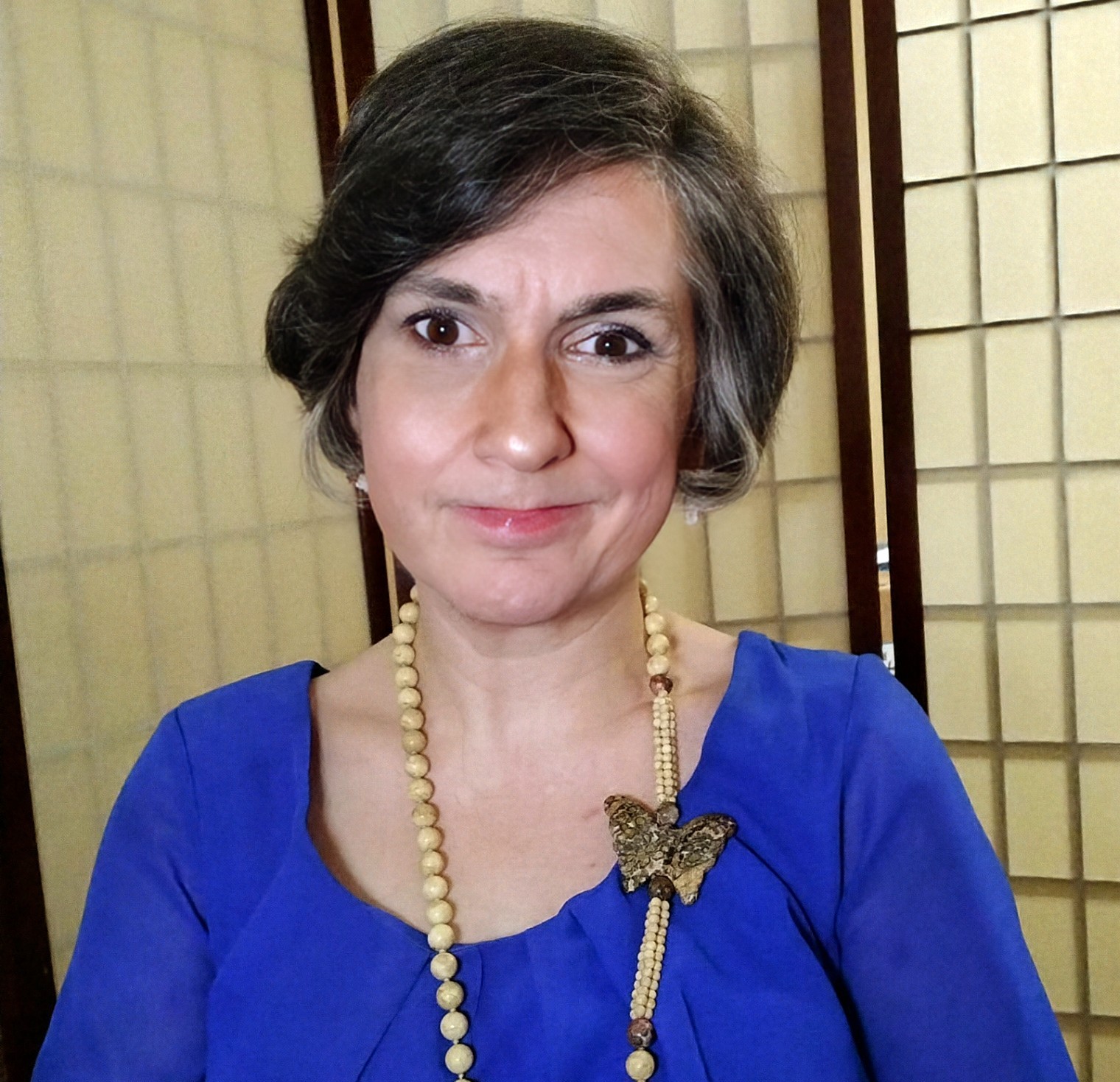

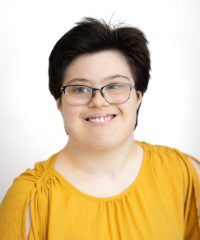 My name is Martha, and I have a pretty amazing job. I am the first young woman with Down syndrome to work at the Georgia State Capitol. Yes, you read that right. The first. And honestly? That is not just a fact. It is a gift.
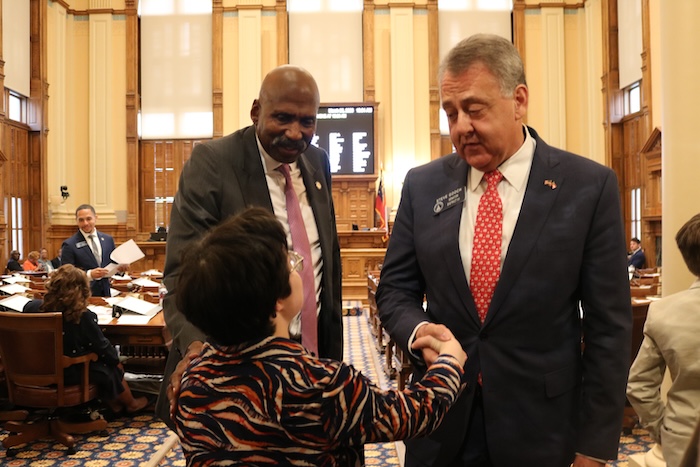 I used to attend Advocacy Days with the Georgia Council on Developmental Disabilities. We'd come to the Capitol to meet our senators and representatives and speak up for the things our community really needs. I always loved going because I had a chance to meet my senators and representatives to let them know about all the big things that the disability community needs help with.
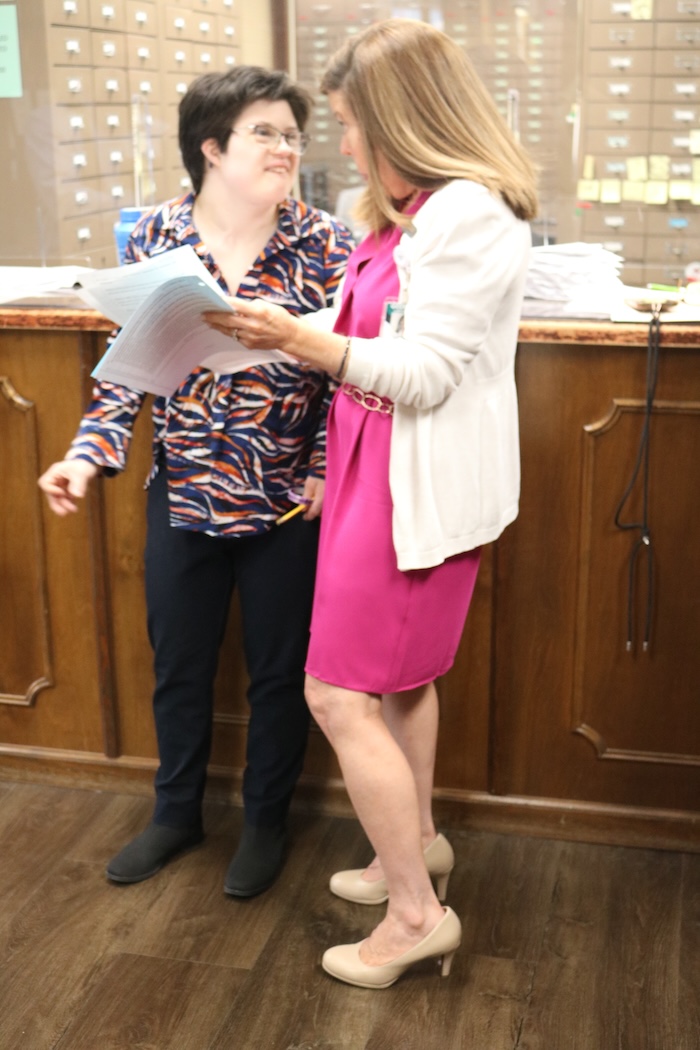 Being a part of Advocacy Days made me realize I wanted to be more involved. I wanted to do something within the Capitol all the time.